Many people who want to look and feel their very best turn to Botox treatments. However, did you know that Botox treatments can also help you get relief from jaw pain and discomfort? In fact, it can benefit muscle wellness to make it easier to cope with not only wrinkles or cosmetic imperfections, but also pain-causing conditions such as TMD.
Here is a little more information on Botox injections, a lesser-known yet very effective pain reliever that is commonly used today.
Botox TMJ treatment is one of the more overlooked tools in TMJ care, and in my chair, it has changed how patients sleep, chew, and get through a workday without wincing. If jaw tension, clenching, or migraines tied to your bite have not eased with a night guard, here is what the treatment involves and what to expect from Dr. Dahan at Ottawa TMJ & Sleep Apnea Clinic.
What Is Botox and How Does It Work for TMJ?
Botox is the brand name for onabotulinumtoxinA, a purified protein that blocks the nerve signal telling a muscle to contract. It is a neuromuscular blocking agent that, when injected into a part of the face, can help decrease instances of muscle contraction. The process behind this is when it comes to wrinkles is quite simple; the Botox loosens and softens the skin to make it appear as if the wrinkles are gone.
Contrary to popular belief that Botox acts as a filler, it in fact levels out the surface of your skin to minimize the visual presence of wrinkles.
The National Institute of Dental and Craniofacial Research estimates TMD affects more than 10 million Americans, and for many of them, that muscle activity is the real source of daily pain, more than the joint itself.
When the masseter and temporalis stay overworked for months, tension spreads into the temples, behind the eyes, and down the neck. Quieting that activity is the premise behind Botox TMJ treatment.
Is Botox FDA-Approved for TMJ Treatment?
The FDA approved Botox for chronic migraine back in 2010, along with several cosmetic and medical uses. That migraine approval applies to patients with fifteen or more headache days a month, a group that overlaps heavily with TMJ-related headache sufferers. For jaw pain, clenching, and Temporomandibular Joint Disorder symptoms,
Botox is considered an off-label treatment: dentists and physicians prescribe it based on clinical research and hands-on experience, not a jaw-specific FDA indication. Dr. Dahan reviews this distinction with patients during a TMJ therapy consultation.
How Botox Relieves TMJ Pain, Jaw Tension, and Migraines
Botox works to relax tightened muscles in the face, scalp, or neck. As a direct result, it has been shown to decrease the frequency and intensity of migraines and pain for many people. Results will vary from person to person, but a noticeable reduction in instances of migraines is still highly likely.
People often describe the change as gradual, less a switch flipping and more a tight fist slowly opening over several days.
For TMJ-related migraines, the effect draws on the same nerve-blocking action behind the chronic migraine approval, interrupting pain signals before they reach the brain.
A small pilot study found that seventy percent of TMD patients reported their headaches improved or disappeared after treatment, with fewer instances of jaw clicking too. Dr. Dahan sets expectations based on your own symptoms, since results vary.
Am I a Candidate for Botox TMJ Treatment?
Individuals wishing to pursue Botox treatments should be aware that it is very safe, making it a popular choice for wrinkle treatments in the first place.
Almost everyone is a perfectly suitable patient for Botox injections; only pregnant women and those with neuromuscular disorders should not have this treatment done. A known allergy to any Botox ingredient is a reason to explore oral appliance-based TMJ therapy instead. Dr. Dahan reviews your full health history before recommending treatment.
So, if you have jaw muscle tension, clenching, or teeth grinding that has not responded to a night guard, physical therapy, or lifestyle changes, you are a candidate for Botox treatment. Frequent headaches that start at the temples or radiate from the jaw are a common reason patients book a consultation.
For a full TMJ symptom checklist, our post on the most common symptoms of TMD walks through what to watch for.
What to Expect During Botox Treatment and Recovery
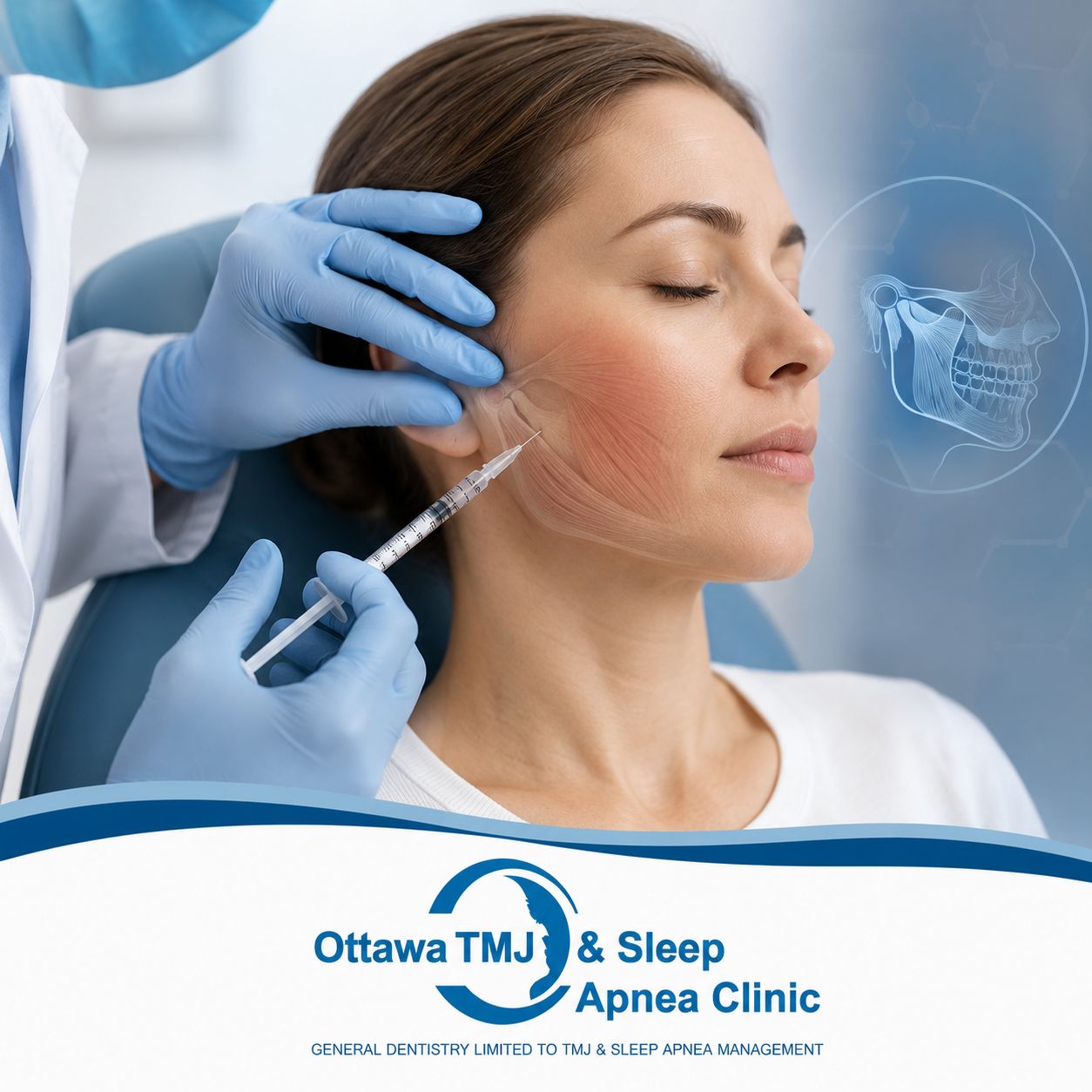
A Botox TMJ session at our Ottawa clinic takes about fifteen to twenty minutes. Dr. Dahan maps the masseter and temporalis by feel, sometimes asking you to clench so he can confirm the muscle borders, then places a series of small injections across both sides of the jaw.
Most patients compare the sensation to a quick pinch, milder than a typical dental injection, and sedation is not needed.
Expect mild tenderness or a bruise-prone feeling at the injection sites for the first day, similar to a light workout in a muscle you rarely use. Stay upright for a few hours afterward and avoid rubbing the area.
Many patients notice looser jaw muscles within ten to fourteen days, with results settling in over the following weeks and lasting about twelve weeks. If jaw pain flares up before your next visit, our guide on managing a TMJ flare-up covers steps you can take at home.
Are There Any Associated Risks of Using Botox for TMJ Pain?
Sometimes, on rare occasions, the treatment may not successfully work, but the patient is not at risk of health or wellness complications regardless. The risks commonly associated with receiving Botox injections are minimal in terms of scope and involve slight, temporary discomfort more than anything else.
Typically, this will include puffiness or asymmetry of the face, particularly due to the fact that the muscles receiving the injection are not those responsible for smiling or similar facial movement.
Botox Compared to Other TMJ Treatment Options
A broader treatment plan tends to outperform any single fix for jaw problems. Custom oral appliances, created from digital scans and precision technology, remain the first step for many patients dealing with nighttime clenching.
Jaw exercises, covered in our guide to TMJ pain relief exercises, help retrain overworked muscles between sessions. For patients whose symptoms overlap with disrupted sleep, treating the nighttime clenching tied to sleep apnea often improves both conditions together.
Our guide on how to treat TMJ covers the complete range of options.
| Approach | Best For | Typical Onset |
|---|---|---|
| Botox TMJ Treatment | Muscle-driven jaw tension, clenching-related migraines | 10-14 days |
| Custom Oral Appliance | Nighttime grinding, mild to moderate TMD | 2-3 weeks |
| Jaw Exercises & Physical Therapy | Ongoing muscle maintenance, mild symptoms | Several weeks |
Your Jaw Pain Does Not Have to Stay Part of Your Routine
At the Ottawa TMJ & Sleep Apnea Clinic, Dr. Dahan performs Botox treatment to benefit your health and wellness from the inside out. Contact us today for further details or to book an appointment.
Frequently Asked Questions
Does Botox work for TMJ relief?
Yes, for many patients, there are benefits of Botox for TMJ. Botox relaxes the masseter and temporalis muscles responsible for clenching and jaw tension, reducing the pain, headaches, and muscle fatigue tied to TMD. Dr. Dahan evaluates your symptoms before recommending treatment.
Is Botox for TMJ FDA-approved?
Botox is FDA-approved for chronic migraine, not for TMJ or TMD. Dentists and physicians use it off-label for jaw pain, based on published clinical research and years of experience treating muscle-driven TMD.
Does insurance cover Botox for TMJ?
Most insurance plans do not cover Botox for TMJ, since it is an off-label use rather than an FDA-approved indication. Some patients offset the cost through health spending accounts.
Is Botox TMJ treatment painful?
The injections feel like a quick pinch, similar to a routine dental injection. Most patients return to normal activities the same day, with mild tenderness at the injection sites for a day or so.