
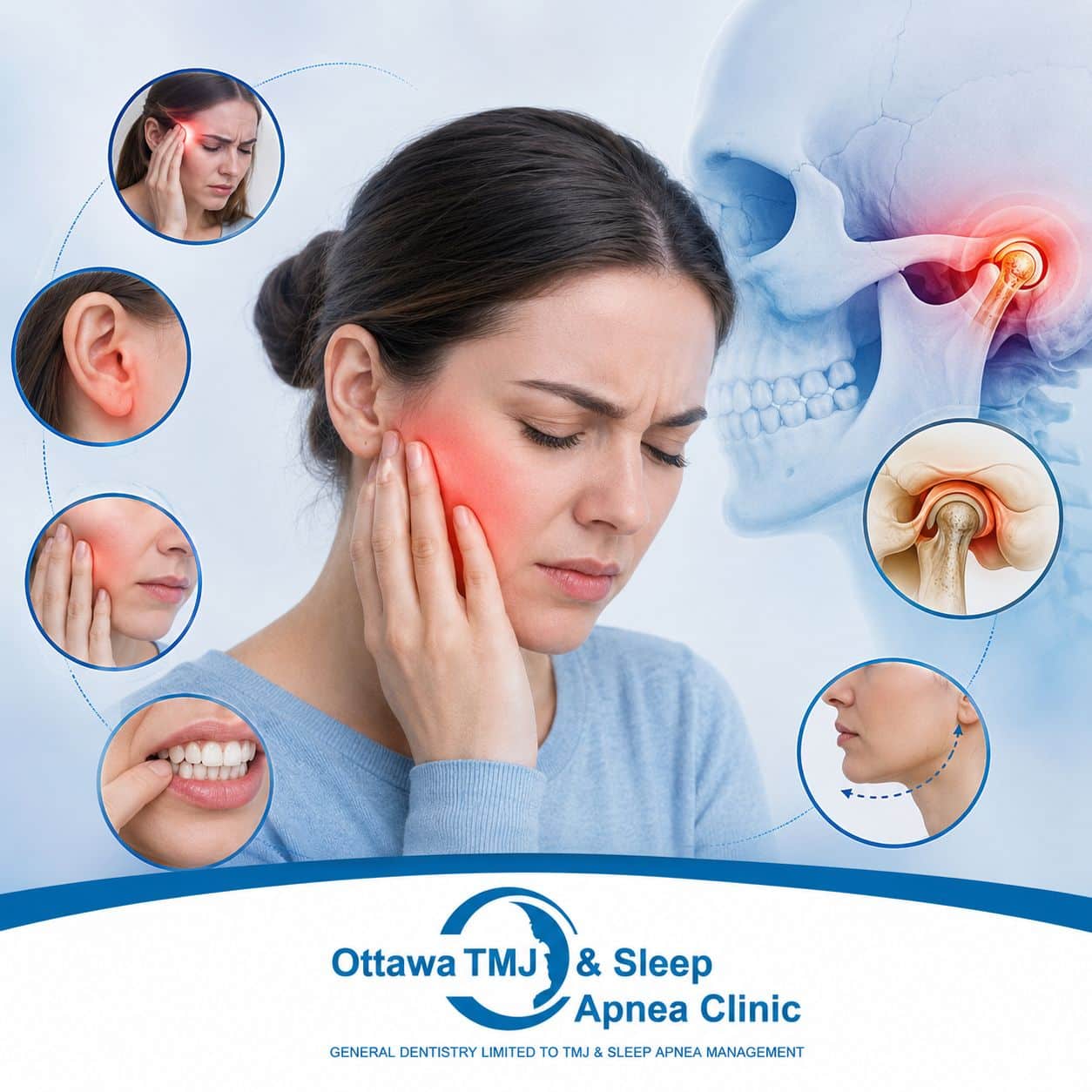
Temporomandibular Joint Disorder (TMD) is a condition that makes it difficult to eat, speak, and go about daily life comfortably. It affects the function of the jaw due to pain and dysfunction in the temporomandibular joint, the hinge that connects your lower jaw to your skull.
While the name might sound obscure, the symptoms are anything but. Jaw pain, persistent headaches, a clicking or locking jaw, and difficulty chewing are daily disruptions that many people quietly put up with for far too long.
There are many symptoms commonly associated with the onset of TMD, and being able to identify them is the first step toward getting the right care. According to the Canadian Dental Association, TMD has many possible causes, and each type of TMD carries its own pattern of symptoms, which is part of why so many people go undiagnosed for months or years.
This guide walks through the TMD symptoms patients most commonly report, what tends to cause or worsen them, and what you can do if any of this sounds familiar.
What Is the Temporomandibular Joint?
You actually have two temporomandibular joints (TMJ), and they connect the lower jaw to the skull. These joints slide and rotate in front of your ears and are among the most-used in the entire body.
TMJs consist of the mandible (the lower jaw) and the temporal bone and are involved every time you chew, speak, yawn, or swallow. Unlike most joints, the TMJ can slide and rotate simultaneously, which gives your jaw its wide range of motion.
Because of this complexity, TMJ disorders often present in ways that aren’t always obvious to the jaw. Headaches, ear pressure, and neck stiffness in patients are often surprising to learn are often traced back to the same source. That’s what makes TMD both easy to dismiss and important to catch early.
Read Also: TMD vs TMJ
Common TMD Symptoms
1. Pain and Tenderness in the Jaw and Jaw Joint Area
Recurring pain and discomfort is the most widely recognized sign of TMD, and it’s typically persistent enough to cause real frustration if left unaddressed. Tenderness, soreness, and aching in the jaw and the joint area directly in front of the ears are closely associated with the condition.
Many patients also describe a dull, constant ache around the ears, not quite an earache, but something that feels like it.
Some patients report that their discomfort spreads toward the temples or down into the shoulders. If the pain in the jaw feels worse in the morning or in the late afternoon, that pattern is worth paying attention to. The Mayo Clinic notes that jaw discomfort or soreness is often most prevalent in the morning or late afternoon.
2. Frequent Headaches and Migraines
Frequent headaches and, in some cases, full migraines are also common symptoms of TMD associated with TMDs. On occasion, they can be more severe or distracting than normal. The masticatory muscles (the jaw muscles responsible for chewing) attach around the temples and sides of the skull, so when they’re chronically tense or overworked, tension-type headaches are a predictable result.
What catches many patients off guard is that these headaches don’t feel like obvious jaw pain. They can feel like ordinary tension headaches or even migraines, and people spend years treating the symptoms without anyone investigating the source.
If you’ve been dealing with recurring headaches that haven’t responded well to standard treatment options, TMD is worth ruling out. It is important to seek out appropriate treatment solutions to minimize the presence of headaches and/or migraines to ensure your continued health and wellness.
3. Locked and Restricted Jaw
TMD can cause the jaw joints to seize or “lock” up, which can result in restricted or outright paralyzed jaw movement. This can come on gradually or happen more abruptly. Either way, restricted jaw function significantly affects quality of life.
You may also experience a clicking sound on occasion, which is yet another indicator of TMD. It’s a clicking, popping, or grating sound that many people notice when they open the mouth or close. Medically, this is called crepitus, and it often indicates that the disc of cartilage inside the jaw joint has shifted out of its normal position.
Occasional clicking without pain is common and not always a cause for concern. But if the clicking is paired with pain, jaw stiffness, or a change in how your bite feels, it’s worth getting evaluated.
4. Toothaches and Chewing Difficulties or Anomalies
The jaw joints and muscles directly control our chewing ability, so it is only natural that our teeth can be affected by TMD should it be present. When those joints are irritated or inflamed, the effects can extend to the teeth themselves.
Chewing difficulties are equally common. Food that requires sustained bite force (think bagels, apples, or steak) can suddenly feel uncomfortable or even painful. Some patients also notice changes in how their upper and lower teeth fit together, a feeling that their bite is “off,” or increased tooth sensitivity. If you’re experiencing any of these without an obvious dental cause, having your jaw inspected by a dentist or doctor is a reasonable next step.
5. Ear-Related Symptoms of TMD: Ringing, Pressure, and Dizziness
Given how close the temporomandibular joint is to the ear canal, it’s not surprising that many TMD patients report ear-related symptoms that have nothing to do with an ear infection.
- A ringing, buzzing, or hissing sound in the ears that many mistake for an audiological problem
- Ear fullness or pressure. A plugged feeling similar to what you’d experience on an airplane
- Dizziness or balance issues. It is less common, but reported by some patients with more advanced TMD
These symptoms appear because the TMJ and the structures surrounding the ear share nerve pathways and ligament connections. When the joint is inflamed or under stress, that irritation radiates into the ear. If you’ve been to an ear specialist and been told your ears look fine, TMD may be a factor worth exploring.
Neck, Shoulder, and Facial Pain Beyond the Jaw
The muscles involved in jaw function connect to the neck, upper back, and shoulders, which means chronic jaw tension often produces a downstream chain of discomfort. Patients frequently describe:
- Stiffness or aching along the sides of the neck.
- Tension in the upper shoulders that won’t respond to massage or stretching.
- Facial pain or a sense of tightness across the cheeks or temples.
- Discomfort when turning the head from side to side.
These symptoms worsen during periods of high stress, which makes sense as stress amplifies jaw clenching and grinding and muscle tension, and that tension has to go somewhere. If your neck or shoulder pain seems to travel upward and settle around your jaw or temples, that pattern is a meaningful clinical clue.
How Do You Know If It’s Temporomandibular Disorder and Not Something Else?
One of the reasons TMD goes undetected for so long is that its symptoms overlap with conditions like ear infections, tension headaches, dental problems, cervical spine issues, and even sinus pressure. A few patterns suggest TMD over other causes.
- Symptoms that appear or worsen when you eat, yawn, or open your mouth wide.
- Jaw pain that’s noticeably worse in the morning (consistent with nighttime grinding) or late afternoon (after sustained daytime use).
- Ear symptoms that have been investigated by an ENT or audiologist with no findings.
- Headaches that cluster around the temples or sides of the skull rather than the forehead or the back of the head.
- A history of jaw clenching, teeth grinding, or a previous jaw injury.
- Symptoms that seem to worsen with stress.
None of these patterns is definitive on its own, but together they point toward the jaw as a reasonable place to investigate.
When Should You See a Professional?
If you are experiencing any or all of these common TMD symptoms at either the same or a worsening degree of severity over the past 6 months, reach out to Ottawa TMJ & Sleep Apnea Clinic today.
At Ottawa TMJ & Sleep Apnea Clinic, Dr. Dahan takes an evidence-based approach to diagnosing and treating TMD. We are experienced in TMD treatment through the application of highly efficient and easy-to-use customized oral appliances, as well as other treatments for TMDs. Contact us today to speak with our team and book an appointment.
You can learn more about Dr. Dahan’s background and treatment philosophy on his practitioner profile, or explore the TMJ therapy services offered at our TMJ clinic in Ottawa.
Frequently Asked Questions About TMD Symptoms
Is TMD the same as TMJ?
Not exactly, though the terms are often used interchangeably. TMJ refers to the temporomandibular joint connecting your jaw to your skull. TMD (temporomandibular disorder) refers to the group of conditions that affect that joint and the surrounding muscles.
Can TMD go away on its own?
In some cases, mild TMD symptoms do resolve without treatment, particularly if they were triggered by a temporary stressor or a short-lived episode of clenching. However, chronic or progressive TMD typically requires active management. Waiting too long can allow the condition to become more complex and harder to treat.
Is TMD common in Canada?
Yes. TMD is estimated to affect between 5 and 15 percent of the adult population at any given time. In Canada, that translates to millions of people dealing with varying degrees of jaw pain, headaches, and related symptoms. It’s more common in women than in men, and the peak incidence falls in the 20–40 age range, though it can occur at any age.
Does TMD affect sleep?
It can, in more than one way. Nighttime bruxism, which is closely linked to TMD, disrupts sleep architecture and can leave patients feeling unrested even after a full night’s sleep. There is also a documented relationship between TMD and sleep-disordered breathing, including obstructive sleep apnea.