At the Ottawa TMJ & Sleep Apnea Clinic, we are experienced in Sleep Apnea treatment, which is a potentially dangerous condition that threatens not only the sleeping habits of millions of individuals but also their safety.
To safeguard wellness and encourage an optimal sleep cycle with adequate airflow, the Ottawa TMJ & Sleep Apnea Clinic is proud to produce Sleep Apnea appliances that help you breathe and sleep easily, comfortably, and safely.
Below, we walk through how oral appliances work, who can benefit from them, and what treatment looks like at our Ottawa TMJ & Sleep Apnea Clinic. If you are still working out if your symptoms point toward sleep apnea, our guide on snoring versus sleep apnea is a good starting point.
Quick Answer
A sleep apnea oral appliance is a custom, mouthguard-style device that holds your lower jaw slightly forward during sleep to keep your airway open. It treats obstructive sleep apnea, offers a quiet and portable alternative to CPAP (Continuous Positive Airway Pressure). Oral appliances are custom-fitted, designed, and monitored by a trained dentist such as Dr. Dahan at our Ottawa TMJ & Sleep Apnea Clinic.
What is Sleep Apnea?
Before moving on to the specifics of our Sleep Apnea appliances, it is a good idea to clearly outline what the condition itself actually is. Sleep Apnea is a common sleep disorder, involving the process of an individual ceasing to breathe while asleep.
There are two variants of the condition:
- Obstructive Sleep Apnea involves a blockage or obstruction in the airway that stops or limits breathing.
- Central Sleep apnea is a serious condition due to a loss of oxygen at night linked with symptoms such as strokes, heart failures, high blood pressure, erectile dysfunction, weight gain, fatigue, and depression.
If left untreated, either variant of the condition can seriously harm an individual, resulting in everything from motor function damage to death in extreme circumstances.
What Is a Sleep Apnea Oral Appliance?
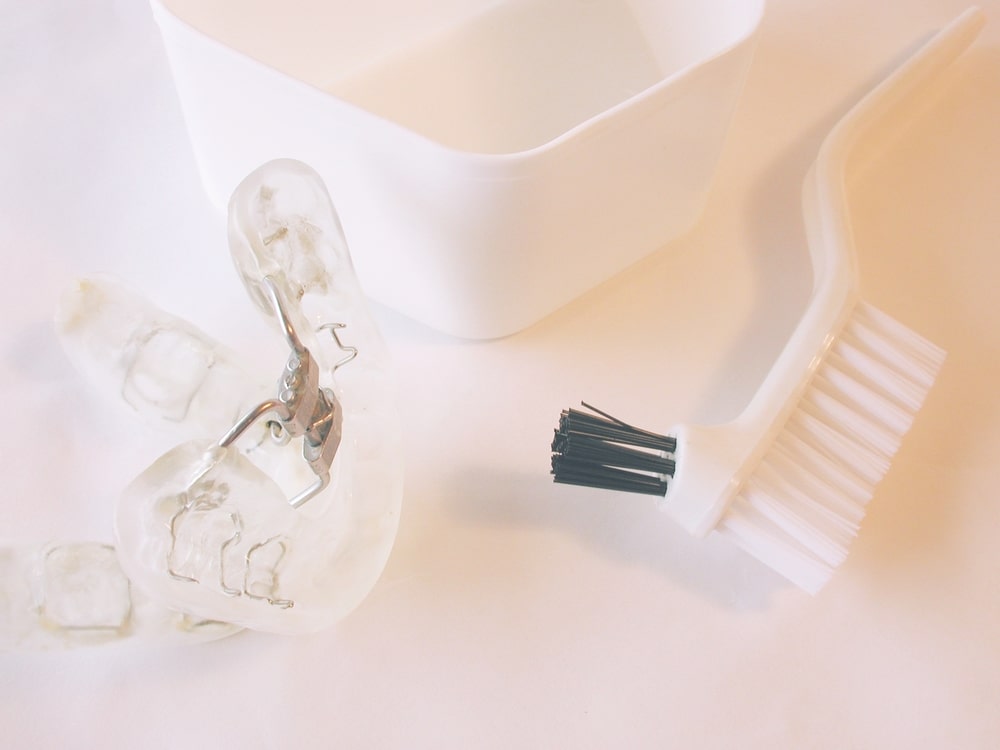
Also called a mandibular advancement device (MAD) or a dental sleep appliance, this device is worn over the upper and lower teeth during sleep. Its design moves the lower jaw a few millimetres forward, which pulls the tongue and soft tissue away from the back of the throat and keeps the airway from collapsing.
The clinical practice guideline published by the American Academy of Sleep Medicine and the American Academy of Dental Sleep Medicine supports oral appliance therapy for adults with OSA who prefer it to CPAP or who cannot tolerate CPAP treatment.
The Issues with CPAP Machines
Traditional CPAP machines used to serve as the primary solution for Sleep Apnea, but more and more people are switching to more comfortable alternatives that are equally effective. CPAP machines blow air into the airway of the patient to ensure sufficient oxygen intake.
These antiquated systems utilize a noisy oxygen production unit as well as cumbersome tubes affixed to a face mask. Therefore, CPAP treatments can be incredibly uncomfortable.
They can also become inefficient due to a greater potentiality of air leakage. In fact, many people say they cannot sleep with a CPAP machine or feel claustrophobic when using one.
Oral Appliance Therapy vs CPAP Therapy
CPAP therapy earns its reputation as the most studied treatment for sleep apnea, and it works well for patients who wear it night after night. The trouble is consistency: many patients find the mask, hose, and machine noise hard to tolerate, and a CPAP machine sitting unused on a nightstand cannot help with sleep apnea at all.
Oral appliances trade some of the raw effectiveness of CPAP for a device patients tend to wear more consistently, narrowing the practical gap between the two considerably.
They pack into a small case, need no power source, and produce no noise. Our sleep apnea and loud snoring treatment page covers symptoms and diagnosis in more depth, and the Canadian Thoracic Society lists both CPAP and oral appliance therapy as recognized treatments for moderate to severe OSA.
The Types of Oral Appliances for Sleep Apnea Treatment We Use at Our Clinic
Mandibular advancement devices are the most common oral appliance for sleep apnea, and they are a recommended treatment option our dentists prescribe.
Most modern devices use two connected pieces, one for the upper arch and one for the lower, adjustable in small increments so Dr. Dahan can fine-tune how far the jaw advances to suit your comfort and airway needs.
Depending on your bite, jaw anatomy, and history with TMJ symptoms, our office may recommend the Panthera D-SAD, SomnoDent, or Thornton Adjustable Positioner (TAP), three of the devices we fit most often.
For patients who cannot tolerate jaw movement, or who have significant tooth loss, a tongue-stabilizing device is sometimes an alternative, holding the tongue forward with gentle suction instead. Our guide to CPAP alternatives covers how these options compare to CPAP therapy in more depth.
“Patients often tell me the adjustment period is shorter than they expected, often a week or two before the appliance feels like a normal part of their nightly routine. The ones who stay consistent with regular follow-up appointments have the smoothest experience.”
Are You a Candidate for a Sleep Apnea Appliance?
Good candidates typically share a few traits in common:
- Mild to moderate obstructive sleep apnea, confirmed through a sleep study.
- Enough natural teeth to anchor the appliance securely.
- A jaw that can move forward comfortably, without pain.
- Difficulty tolerating CPAP, even with severe OSA in some cases.
Oral appliances work well for most patients, though research on mandibular advancement device therapy shows about one in three patients see limited benefit from the appliance alone, one reason follow-up monitoring matters so much.
Active gum disease, significant tooth loss, or a diagnosed TMJ disorder may call for a modified approach, since the appliance shifts jaw position and can add load to the joint.
This is where our experience in both TMJ therapy and sleep medicine becomes useful, since Dr. Dahan can design and monitor an appliance that supports your airway without adding strain to an existing jaw problem.
How Do Oral Sleep Apnea Appliances Solve These Issues?
Oral appliances have been recently shown to be just as effective as CPAP machines for the treatment of most cases of sleep apnea. Their functionality is quite simple yet incredibly efficient.
The appliance is designed to bring your lower jaw forward to open up the airway, which then allows for natural breathing and sufficient oxygen intake without any need for other support systems designed for the same purpose.
Without tubes or cumbersome, noisy machines, the specially shaped oral appliance ensures for consistent, optimized airflow that protects the patient at night while they sleep.
How are the Oral Appliances Fitted?
To ensure that the oral appliance is an ideal, suitable solution for an individual, a preliminary examination is first performed to gauge their candidacy.
The jaw has to move in a forward position, and the individual needs to have most of their teeth. Then, if they are deemed eligible, an impression is made of their lower and upper teeth as well as their occlusion.
If you suffer from Sleep Apnea, an oral appliance could be an effective treatment option for you. To wear it is simple – just wear it over your teeth at night and take it off in the morning.
Contact the Ottawa TMJ & Sleep Apnea Clinic today to learn more about this innovative and user-friendly treatment appliance.
Living With Your Oral Appliance: What Our Patients Tell Us
In the first weeks, you might feel some mild side effects. A small number of patients notice extra saliva, a dry mouth, or slight tenderness where the appliance rests against the gums. These effects are common and typically ease as the mouth adjusts to the new device.
Nighttime teeth grinding, or bruxism, can also affect how an appliance feels and how long it lasts, so patients with a grinding habit are monitored closely for wear on the device.
Our guide to sleep bruxism covers the connection between grinding and jaw strain. We schedule follow-up visits in the weeks after your fitting to check comfort and make small adjustments as needed.
Wearing it is simple. It goes in before bed and comes off in the morning, alongside the same rinse and brush routine as a retainer.
Frequently Asked Questions
Does an oral appliance work as well as a CPAP machine?
For patients with mild to moderate sleep apnea, oral appliances can bring a reduction in symptoms similar to CPAP, in part because patients tend to wear them more consistently. For severe OSA, CPAP is generally more effective on measurement alone, though an oral appliance can still help when CPAP is not tolerated.
Can an obstructive sleep apnea oral appliance treat central sleep apnea?
No. Oral appliances address the physical airway blockage found in obstructive sleep apnea. Central sleep apnea starts with the brain’s breathing signals rather than a blockage, so it needs a different treatment approach, which is why a proper diagnosis matters before starting therapy.
How long does it take to get used to wearing a sleep apnea oral appliance?
Most patients adjust within one to two weeks when treating sleep apnea. Mild side effects such as dry mouth or extra saliva tend to fade as the mouth adapts, and follow-up visits allow the team to check comfort and fit along the way.
Can I use oral appliance therapy for sleep apnea if I have TMJ pain?
Sometimes, with careful planning. Since the appliance shifts jaw position, patients with TMJ disorders need an assessment first, so the jaw joint and the airway can be evaluated before treatment begins.