
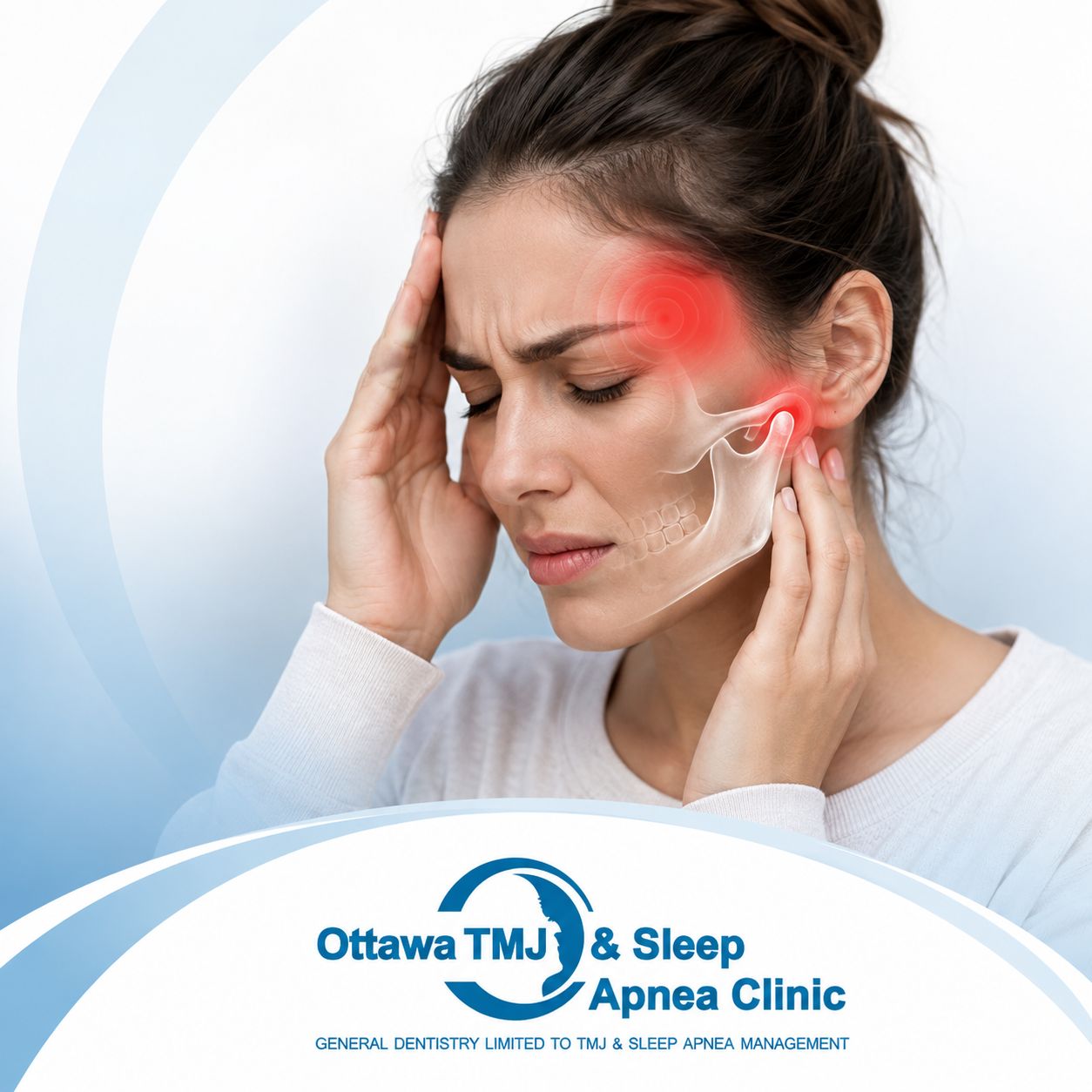
Most people who deal with recurring head pain trace it back to stress, poor sleep, or not enough water. Few think to look at their jaw. When the temporomandibular joint is under pressure, the pain it generates can travel far from where it starts, landing in the temples, forehead, behind the eyes, and down into the neck. This guide explains what a TMJ headache is, how it develops, and what separates it from other types of head pain.
What Is TMJ Headache and How Does It Develop?
Each side of your face has a temporomandibular joint, located directly in front of the ear. These two joints, paired with a network of muscles, ligaments, and nerves, control nearly all mouth movement, such as chewing, speaking, swallowing, and yawning.
When something disrupts this system, the surrounding muscles respond by tightening. One of the principal muscles involved in jaw movement, the temporalis, fans out across both sides of the skull. When it becomes strained or inflamed, the tension spreads outward, producing pain that can feel very much like a headache because, physiologically, that is what it is.
This referral pattern is driven partly by the trigeminal nerve, which supplies sensation to the jaw, teeth, face, and broad regions of the head. When the jaw area is under chronic load, irritation along this nerve system activates pain signals in locations removed from the joint itself.
According to the National Institute of Dental and Craniofacial Research, temporomandibular disorders (TMD) affect between 5 and 12 percent of the general population at any given time, making them one of the more prevalent causes of ongoing facial and head pain.
What Causes TMJ Headache?
In most clinical presentations, two or more contributing factors are present simultaneously, which is part of why these headaches can persist despite treatments targeting only one of them.
- Sleep bruxism (teeth grinding at night): Sustained grinding puts prolonged pressure on the joint and its surrounding muscles for hours during sleep, often leaving the jaw, temples, and head sore by morning.
- Daytime jaw clenching: Frequently tied to stress, intense concentration, or anxiety. Many people clench without any awareness of doing it.
- Joint disc displacement: The cushioning disc inside the TMJ can shift out of position, disrupting smooth joint movement and increasing muscle strain over time.
- Arthritis: Both osteoarthritis and rheumatoid arthritis can affect the temporomandibular joint directly, causing inflammation that extends into surrounding muscles and connective tissues.
- Jaw injury: Trauma from accidents, sports, or extended dental procedures can displace the jaw joint and leave lasting areas of muscle tension.
- Chronic poor posture: A sustained forward head position redistributes strain onto the jaw, neck, and base of the skull, feeding into the overall load on the temporomandibular joint.
Understanding how these factors overlap is useful before concluding symptoms. For context on the relationship between TMJ and TMD terminology, our guide on the key differences between TMD and TMJ covers this clearly.
TMJ-Related Headache vs. Tension Headache or Migraine?
TMJ-related headaches are misidentified frequently. Clinical reviews have found that approximately 31 percent of people whose headaches were traced to TMD had previously been diagnosed with tension-type headaches. The overlap exists because the pain can feel similar, and the jaw is rarely examined during a standard headache consultation.
The American Migraine Foundation notes that temporomandibular disorders can act as a contributing factor in migraine episodes for some patients. TMD and migraines can co-exist and interact, which adds another layer of complexity to diagnosis and treatment. For a look at how migraines and jaw pain intersect, the clinic’s post on what you didn’t know about migraines covers the overlap in detail.
| Headache type | Typical feel | Key differentiators |
|---|---|---|
| TMJ headache | Dull ache or pressure near temples, jaw, ears. | Worsens with chewing, talking, or yawning; morning onset common; accompanied by jaw clicking, stiffness, or ear pressure. |
| Tension headache | Band-like pressure wrapping around the head. | Linked to stress or poor posture; does not typically worsen with jaw movement. |
| Migraine | Intense, often one-sided throbbing pain. | Comes with nausea, light or sound sensitivity, sometimes visual disturbances; not specific to jaw activity. |
The Canadian Dental Association’s clinical overview of temporomandibular disorder identifies headache and neck pain as two of the more common associated presentations. Without a targeted jaw examination, the jaw connection is frequently missed. That gap explains why some people cycle through persistent headache treatments for years without a meaningful change in their symptom pattern.
TMJ Headache’s Typical Pain Pattern and Location
A TMJ headache often begins around the temples or the area directly in front of and beneath the ears, often extending into the forehead, behind the eyes, along the jaw itself, down the neck, and occasionally into the shoulders. Many people describe it as a steady, heavy pressure rather than a sharp or throbbing pulse.
Morning symptoms are a recognized pattern, particularly in people with sleep bruxism. The pain may be most pronounced shortly after waking and gradually ease as the jaw muscles release, or it may persist and intensify again during meals that involve significant chewing.
According to a GoodRx clinical review of TMJ-related headaches, approximately 80 percent of people diagnosed with a TMJ disorder develop headaches as part of their symptom picture.
The following signs, alongside recurring head pain, are worth noting and discussing with a dental professional.
- Jaw pain or tenderness near the ear when pressed.
- Clicking, popping, or grinding sounds when opening or closing the mouth.
- Headaches that are consistently worse in the morning.
- Pain that increases during chewing, yawning, or extended talking.
- Ear pain or pressure in the absence of an ear infection.
- Jaw stiffness or limited ability to open the mouth fully.
- Neck and shoulder tension that accompanies head pain.
- Headaches that do not respond to standard pain medication.
If several of these patterns apply, a jaw-focused assessment is a reasonable next step. Our guide on how to recognize a temporomandibular joint disorder walks through the full range of TMD symptoms.
Who Is Most Likely to Experience TMJ Headaches?
TMD can develop at any age, though it presents more often in women between 20 and 40 than in other demographic groups. The Cleveland Clinic’s overview of temporomandibular disorders notes that many cases respond well to conservative, non-surgical management when identified appropriately.
Certain patterns are seen consistently among people who develop jaw-driven head pain.
- High-stress environments combined with a habit of clenching the jaw during concentration or sleep.
- A history of teeth grinding, described in detail in the clinic’s post on sleep bruxism as a silent contributor to jaw pain.
- Previous jaw, neck, or head injuries, including from dental procedures, car accidents, or sports.
- Pre-existing arthritis affecting the joints of the face or jaw.
- Sleep-disordered breathing, which can influence jaw positioning during sleep and increase the load on the joint overnight.
For some people, jaw symptoms and chronic headaches develop gradually, worsening over months before the connection becomes clear. For others, onset follows a specific event like an injury or a prolonged period of high stress. The clinic’s resource on who is at risk for developing chronic TMD outlines the risk factors in detail.
Getting a Professional Assessment for TMJ Headaches in Ottawa
At Ottawa TMJ & Sleep Apnea Clinic, Dr. Haissam Dahan brings focused experience in TMJ disorders and orofacial pain, with a clinical fellowship from Massachusetts General Hospital in Boston.
Depending on what the assessment reveals, a treatment plan for TMJ-related headaches may include a custom oral appliance, guided jaw exercises, lifestyle adjustments, and for certain patients, therapeutic botulinum toxin injections to relax overworked jaw muscles.
The clinic’s post on botulinum toxin as a pain management approach explains how this works in practice.
The right treatment plans, timelines, and outcomes vary based on how long symptoms have been present, what is contributing to them, and how the individual responds to therapy. The TMJ and facial pain treatment outlines the clinic’s assessment process and what to expect during the first visit.