
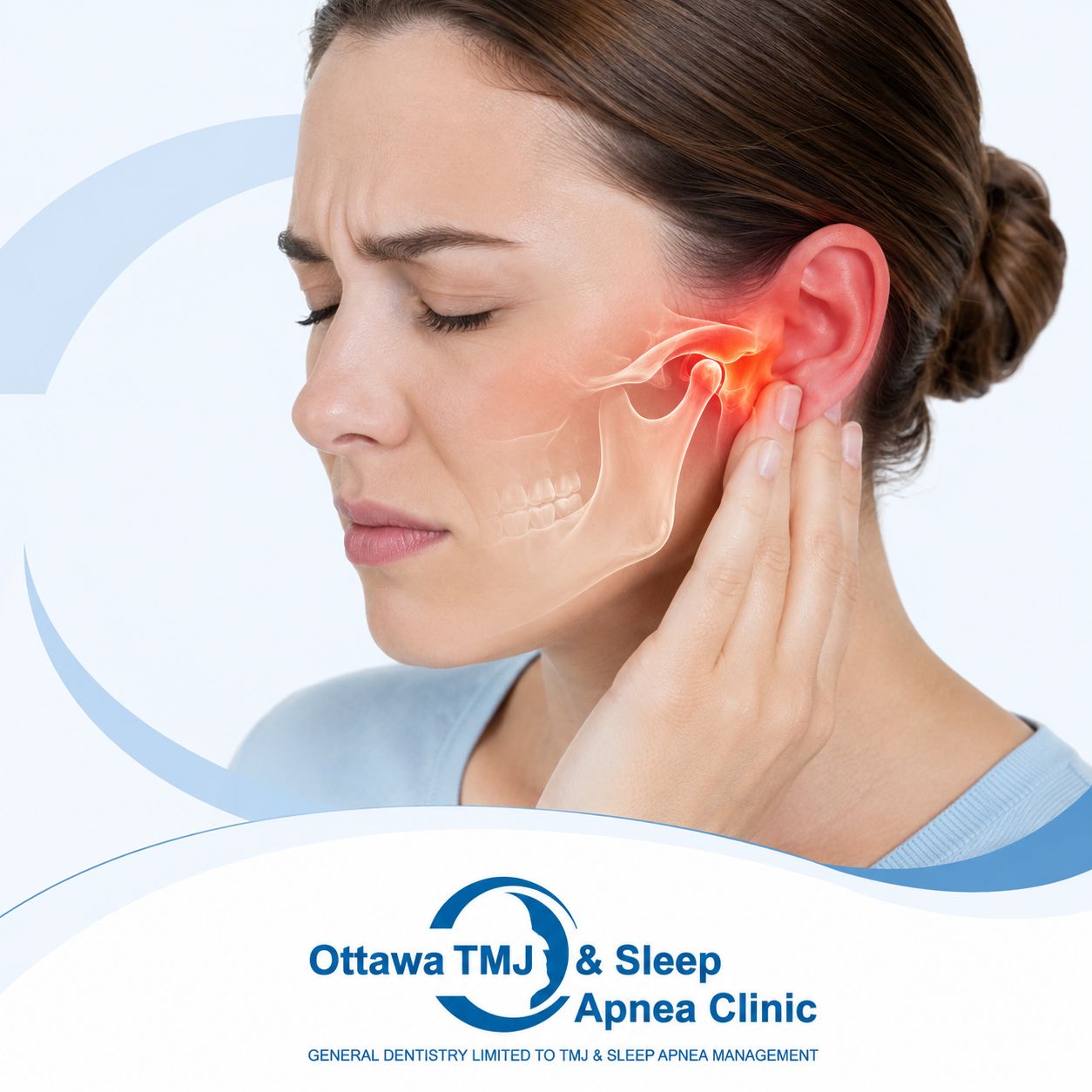
Temporomandibular Joint Disorder (TMD) is a condition that affects the temporomandibular joint along with the surrounding muscles and tissues. It is characterized by pain, stiffness, and dysfunction in the jaw area. While TMD is known primarily as a jaw condition, it frequently causes symptoms that extend well beyond the jaw, including ear pain. In fact, TMJ ear pain is one of the most common complaints among people with this disorder.
Dr. Haissam Dahan and the team at Ottawa TMJ & Sleep Apnea Clinic have diagnosed and addressed TMJ-related conditions for patients across Ottawa and the surrounding area. The following information is intended to help you understand the connection between TMJ and ear and what to do if you think your jaw may be involved.
What Causes TMJ Ear Pain?
To understand why jaw problems produce ear symptoms, you need to know where the temporomandibular joint actually sits in your head.
The TMJ is located in front of your ear canal, separated by just a few millimetres of tissue. That proximity alone explains a lot. But there are three additional mechanisms that make ear pain a surprisingly common feature of TMJ disorder (TMD).
Shared muscles.
The muscles that move your jaw sit in close contact with structures of the middle ear. One muscle, the tensor tympani, attaches to the malleus (one of the three tiny hearing bones) and also has connections to the mandible. When the jaw muscles are chronically overloaded from clenching or grinding, the tension in these adjacent structures can create sensations of aching, fullness, or muffled sound.
Shared nerve pathways.
The auriculotemporal nerve (a branch of the trigeminal nerve) supplies both the TMJ and the outer ear. When the joint becomes inflamed or irritated, pain signals can travel along this shared pathway and register as ear pain even when the ear itself is completely healthy. This is why you can have genuine, consistent ear pain and still get a clean bill of ear health at every appointment.
Referred pain from jaw muscles.
The masseter and medial pterygoid muscles are well-documented sources of referred pain. It means inflammation or tension in those muscles can produce discomfort somewhere else entirely. In this case, that somewhere else is often deep inside or around the ear.
Research found that aural symptoms, such as ear pain, tinnitus, ear fullness, and dizziness, appear in up to 85% of people with temporomandibular disorders. If you have TMD and your ears are bothering you, the odds are high that the two are connected.
How TMJ-Related Ear Pain Differs from an Ear Infection
The overlap in symptoms makes this genuinely difficult to sort out. Both conditions can produce an aching, blocked, or sore feeling in one or both ears. Here are the signs that suggest your ear pain may be coming from the jaw rather than the ear.
TMJ-related ear pain is more likely when:
- The pain gets worse when you chew, yawn, or open your mouth wide.
- You also notice jaw clicking, popping, or morning stiffness in the jaw.
- A course of antibiotics brought no improvement.
- The pain runs along the side of your face, jaw, or temple, not just inside the ear canal.
- Symptoms are worse in the morning, particularly if you grind or clench during sleep.
Ear infections, by contrast, typically come with other signs such as fever, fluid or drainage, and a clear response to treatment. They’re also more likely in children than adults, and they tend to resolve fully with appropriate care.
| Feature | TMJ Ear Pain | Ear Infection |
|---|---|---|
| Visible on ear examination? | Usually no. The ear looks healthy. | Yes. Redness, fluid, swelling. |
| Related to jaw movement? | Often yes, worse with chewing, yawning. | No clear jaw-related pattern. |
| Responds to antibiotics? | No. | Yes (bacterial) / varies (viral). |
| Accompanied by jaw symptoms? | Usually. Clicking, stiffness, facial tension. | Typically no. |
| Worse in the morning? | Common, especially with bruxism. | Can be, but not tied to jaw habits. |
If your ear pain keeps returning and your ears consistently look healthy on examination, a jaw assessment is a reasonable and worthwhile next step. Many patients find that symptoms they’d been treating for months improve significantly once the underlying jaw problem is properly addressed.
Common Symptoms of TMJ and Ear Pain That Often Go Unrecognized
Most people searching for information on this topic are thinking about an ache. But the ear-related symptoms associated with TMD go further than that.
These symptoms don’t always occur together, and not everyone with TMD will experience all of them. But if you’re dealing with more than one alongside jaw pain, clicking, or headaches, the jaw is worth examining as part of the picture.
Can TMJ Ear Pain Lead to Tinnitus and Dizziness Too?
Yes, though the relationship is more nuanced than a simple cause-and-effect. People with TMJ disorders are significantly more likely to experience tinnitus. In some cases, the intensity of the ringing changes when the person moves their jaw, which is a strong indicator that the jaw is involved.
When tinnitus fluctuates with jaw movement, it’s called somatosensory tinnitus. This pattern is a meaningful sign that the jaw is contributing to the experience. Research published in the journal CRANIO found an association between TMD and tinnitus-related hearing changes, and one clinical study found that 90.2% of TMD patients experiencing ear fullness reported meaningful improvement after receiving jaw-focused treatment.
As for dizziness, the vestibular (balance) system and the jaw share some neurological connections. Chronic muscle tension in the jaw, neck, and upper shoulder region, particularly if combined with long-standing TMD, can contribute to disrupted balance signals. It’s less common than tinnitus or ear pain, but it is a recognized feature of the condition in some patients.
Note
This does not mean that treating the jaw will resolve tinnitus or dizziness in every case. Both symptoms can have multiple contributing causes. What it does mean is that if you have unexplained ear symptoms and signs of a jaw disorder, the jaw deserves attention as part of a thorough assessment. A proper evaluation will help determine how much of what you’re experiencing is related to the TMJ.
What to Do If You Think TMJ Is Involved
The first thing most people in this situation need is a clinical assessment focused on TMJ and orofacial pain, which looks at a different set of factors: range of jaw movement, joint sounds (clicking or crepitus), muscle tenderness on palpation, bite alignment, teeth-grinding and clenching patterns, and how reported symptoms correlate with jaw activity.
At Ottawa TMJ & Sleep Apnea Clinic, Dr. Dahan conducts an initial evaluation that draws on his background in orofacial pain and dental sleep medicine. You can read more about his approach on the Dr. Dahan page.
If you’ve been dealing with persistent ear symptoms and your ears have repeatedly been checked out fine, a jaw assessment may give you the answers you’ve been missing.
Frequently Asked Questions
Can TMJ disorder cause ear pain?
Yes. TMJ can cause significant ear pain. Because the temporomandibular joint and the ear sit millimetres apart, inflammation, pain, and dysfunction in the joint directly affect nearby ear structures. Ear pain caused by TMJ is one of the most frequently reported symptoms of this joint disorder.
Why does TMJ cause ear pain?
There are a few reasons TMJ and the ear are so closely linked. First, the joint sits directly in front of the ear canal, so inflammation can cause sensations that radiate into the ear. Second, the trigeminal nerve serves both the TMJ and the outer ear. So, when the joint is irritated, pain signals travel along this shared pathway and register as ear pain due to a jaw problem rather than an ear problem. Third, jaw muscles can produce referred pain that originates in the muscle but feels like it’s coming from the ear entirely.
How do I know if my ear pain is from TMJ?
Ear pain is often linked to TMJ when it consistently comes back but your ears look healthy on examination. Key signs are that the pain or discomfort worsens when you chew or yawn, you notice jaw clicking or morning stiffness alongside your ear-related symptoms, antibiotics have brought no improvement, and the pain or tenderness runs along the jaw and temple rather than deep inside the ear canal. If you’re experiencing persistent ear pain that fluctuates with jaw movement, TMJ problems are worth investigating.