
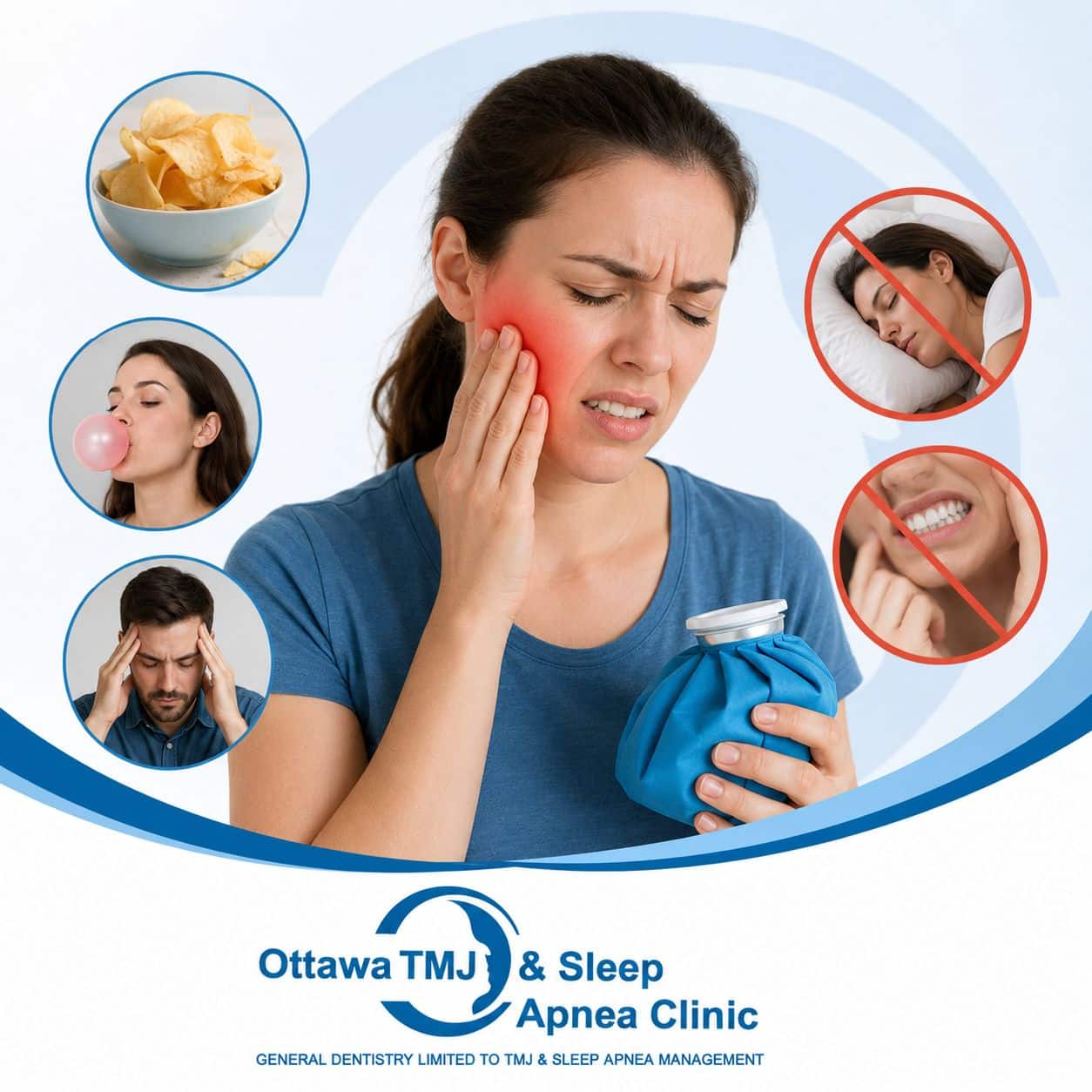
Jaw pain that seems to appear from nowhere. A sharp ache when you bite into something, a sudden tightness across your face, or a dull throb radiating toward your ear. For people living with TMJ disorder, these moments are familiar and frustrating.
A TMJ flare up can last a few hours or stretch into days. Some people get them occasionally, while others deal with them weekly. Either way, the experience is disruptive, and the more you understand about what drives a TMJ flare-up and what makes it worse, the better positioned you are to manage it.
According to the National Institute of Dental and Craniofacial Research, between 5% and 12% of adults are affected by some form of TMJ disorder, making it one of the most common sources of chronic facial pain. Here is what you need to know.
What Is a TMJ Flare-Up?
The temporomandibular joint connects your jawbone to your skull on both sides of your face, sitting just in front of each ear. This joint handles opening and closing your mouth, chewing, speaking, and yawning. Because it’s in near-constant use throughout the day, it’s also vulnerable to irritation when under sustained physical or emotional stress.
A TMJ flare-up occurs when the joint and the surrounding muscles become irritated or inflamed, producing a sudden increase in pain and dysfunction. During a flare up, the muscles controlling jaw movement may tighten significantly, the joint itself can become inflamed, and the disc inside the joint may shift, catching or grinding during movement.
Common symptoms during a TMJ flare up include
- Jaw pain or tenderness that worsens with movement.
- Clicking, popping, or grinding sounds in the joint.
- Difficulty opening or closing the mouth fully.
- Pain spreading into the ear, temple, or neck.
- A feeling of jaw fatigue or tightness.
- Facial swelling and pain around the joint.
Headaches are also common during flare ups, as the muscles involved in jaw movement connect to structures that influence head pain. If headaches are part of your picture, this piece on migraines and jaw disorders covers the relationship in useful detail.
How Long Do TMJ Flare Ups Last?
The duration of TMJ flare ups varies considerably. A mild flare up may settle within a few hours with rest and reduced jaw activity. A more significant episode can persist for several days, particularly if the triggering behavior continues unchecked.
| Episode | Duration | What to Expect |
|---|---|---|
| Mild episode | Hours | Settles with rest and reduced jaw load. |
| Moderate episode | 2–5 days | May require dietary changes and soft tissue care. |
| Persistent episode | 1+ weeks | Warrants clinical assessment to address underlying causes of your TMJ. |
Flare ups that recur frequently, last longer than a week, or gradually worsen over time are a signal that the underlying condition warrants a thorough assessment. Occasional jaw discomfort is common; ongoing cycles of pain are not something to normalize.
What Triggers a TMJ Flare Up?
TMJ flare ups rarely have a single origin. They tend to result from an accumulation of stressors on the jaw joint and surrounding muscles, often building over time before symptoms spike. Recognizing the common causes specific to your situation is one of the most important steps in managing the condition over the long term.
If you’re unsure whether your symptoms point to TMJ disorder, this overview on identifying TMJ disorder walks through the picture.
Stress and Jaw Clenching
Psychological and physical stress are among the most consistent triggers documented in TMJ research. When the body perceives stress, the muscles involved in jaw movement tend to tighten. For many people, this manifests as daytime jaw clenching, sometimes without any awareness that it’s happening. The sustained muscle contraction raises tension in the joint and surrounding tissue, eventually crossing the threshold into pain.
The Cleveland Clinic notes that stress management is a core component of TMD care, alongside physical treatment. A sustained period of excessive stress at work, disrupted sleep, or emotional strain can be enough to set off a flare up in someone whose jaw system is already sensitized.
Sleep Bruxism and Night Grinding
Sleep bruxism is the unconscious grinding or clenching of teeth during sleep. It is closely connected to TMJ disorder, and the two frequently reinforce one another. During an episode of teeth grinding, the jaw joint sustains repeated pressure and friction. Over a single night, this can be enough to produce significant soreness and stiffness by morning.
Bruxism can be difficult to detect without a partner’s observation or clinical evaluation, since it happens outside conscious awareness. Sleep bruxism is worth understanding in depth if you frequently wake up with TMJ pain, tooth sensitivity, or morning headaches — all signals that something is occurring during sleep.
Beyond stress and bruxism, a range of other factors contribute to flare ups.
Hard and chewy foods
Bagels, tough cuts of meat, raw carrots, eating hard, ice, and chewy candy require sustained, forceful chewing. This overworks already-strained jaw muscles and can directly provoke a flare up, particularly when there is existing tenderness.
Poor posture
Forward head posture and rounded shoulders shift the alignment of the jaw and add strain to the muscles that stabilize the joint. Extended screen time and prolonged desk work are frequent contributors, particularly when ergonomics are poor.
Hormonal fluctuations
Research suggests TMJ symptoms worsen for some women during hormonal changes, including menstruation, pregnancy, and perimenopause. Mayo Clinic notes that females are twice as likely as males to experience TMJ disorders, with hormonal factors thought to play a contributing role in pain sensitivity and joint inflammation.
Dental procedures or jaw injury
A direct impact to the jaw, a sports-related injury or trauma, or a lengthy dental procedure requiring the mouth to be held open for an extended period can all disturb the joint. Symptoms sometimes appear days after the event, which can make the connection easy to miss.
Wide or forceful jaw movements
Yawning deeply, biting into something oversized, or singing for extended periods places significant stretch on the joint and surrounding muscles. For someone with an already-irritated TMJ, these movements can act as immediate triggers.
For more context on the risk factors that make certain people more prone to repeated episodes, this article on who is at risk for chronic TMD offers a thorough picture.
What to Avoid During a TMJ Flare Up
Once a flare-up begins, how you respond in the following hours and days influences how long TMJ flare ups last. Certain foods, habits, and behaviors consistently aggravate the joint and slow recovery. The general principle is straightforward: reduce load on the jaw while it’s inflamed.
Foods and Jaw Habits to Skip
During a flare up, the jaw benefits from reduced mechanical demand. Foods that require significant chewing effort are the first to set aside. This includes raw vegetables, hard breads, tough meats, nuts, and anything with a chewy or fibrous texture. A soft diet of soups, cooked grains, smoothies, and tender proteins allows the joints and muscles to settle without adding new strain.
Beyond food choices, several common habits prolong a flare up.
- Chewing gum. Repetitive gum chewing is one of the most overlooked contributors to jaw strain. During a flare up, stopping entirely is advisable.
- Resting your jaw on your hand. This shifts the joint out of its natural alignment and adds sustained pressure to one side of the face.
- Wide yawning. Placing a fist gently under the chin during a yawn can help limit the depth of jaw opening and reduce pain and inflammation in the joint.
- Nail biting and pen chewing. These habits place uneven pressure on the jaw and are worth addressing as a long-term measure, not just during acute episodes.
- Sleeping on your stomach or the affected side. This position puts direct pressure on the jaw joint throughout the night. Sleeping on your back with the jaw relaxed is generally more comfortable during a flare up.
For short-term comfort, apply a warm compress to the jaw for 10 to 15 minutes to reduce muscle tension. Cold packs may be more appropriate in the first 24 hours if there is a sense of acute inflammation. Individual responses vary, so pay attention to what provides relief in your case and follow the guidance of whoever is managing your care.
When a TMJ Flare Up Needs Professional Assessment
Managing mild symptoms at home is reasonable in the short term. Flare ups that do not settle within a week, that are increasing in frequency, or that begin interfering with eating, speaking, or sleep warrant an assessment by someone with focused experience in jaw disorders.
Repeated flare ups without structured management tend to follow a predictable pattern where each episode sensitizes the joint further, making the next one easier to trigger and harder to resolve.
Understanding the difference between TMD and TMJ is a useful starting point. This article on TMD vs TMJ: key differences and treatments explains the distinction clearly.
At Ottawa TMJ & Sleep Apnea Clinic, Dr. Haissam Dahan takes a thorough approach to identifying the root cause of TMJ symptoms. He holds a Qualified Dentist designation from the American Academy of Dental Sleep Medicine and has completed a clinical fellowship in Orofacial Pain at Massachusetts General Hospital.
Treatment at the clinic is non-surgical and may include custom oral appliances, therapeutic exercises, lifestyle modifications, and in appropriate cases, botulinum toxin therapy to reduce overactive jaw muscle activity.
If headaches are part of your symptom pattern alongside TMJ pain and discomfort, the headache and migraine treatment options at the clinic address this connection directly, since the two frequently share a common source.
A TMJ flare up is uncomfortable and disruptive, but understanding your triggers and knowing what to avoid gives you practical tools to manage the experience. For flare ups that are persistent, worsening, or recurring frequently, a comprehensive assessment is the most reliable path forward.