Sleep apnea numbers in Canada are hard to ignore. Statistics Canada found that close to a third of Canadian adults are at moderate or high risk for the condition, and the Canadian Lung Association estimates that one in five adults has at least mild sleep apnea. Genetics, weight, and airway anatomy explain a lot of that risk. One piece gets overlooked more often: how you lie down at night.
Sleep apnea positions change the shape of your airway before a single breath happens. Lying flat on your back lets gravity pull soft tissue toward the throat. Turning onto your side gives that tissue somewhere else to go.
For some people, that shift is the difference between a full night of interrupted breathing and a night with far fewer episodes.
So, if you want to sleep better and improve overall sleep quality, this guide covers what research says about different sleeping positions for people suffering from sleep apnea, how to change a position habit that has been with you for years, and why Dr. Dahan at Ottawa TMJ and Sleep Apnea Clinic pays close attention to position in patients who also deal with jaw pain or clenching.
Why Sleep Apnea Positions Change How You Breathe at Night
Breathing during sleep depends on keeping a narrow space open, the airway behind your tongue and soft tissues. When you lie on your back, gravity pulls both structures downward, toward the back of the throat.
For people with a naturally narrower airway, that shift can close the space almost completely, producing the pause in breathing that defines obstructive sleep apnea.
A 2013 review in Sleep and Breathing found that position-dependent symptoms affect a large share of people with obstructive sleep apnea, in some estimates more than half.
Researchers call this positional obstructive sleep apnea, or POSA. It means the severity of someone’s condition can shift a great deal between back sleeping and side sleeping, even without any change in weight or airway anatomy.
Central sleep apnea works differently. It stems from a breathing signal problem in the brain rather than a physical blockage. Even so, research still links back sleeping to more frequent breathing interruptions in people with this type, likely because lung volume and chest expansion change with position too.
Side Sleeping: The Best Position Most Doctors Recommend
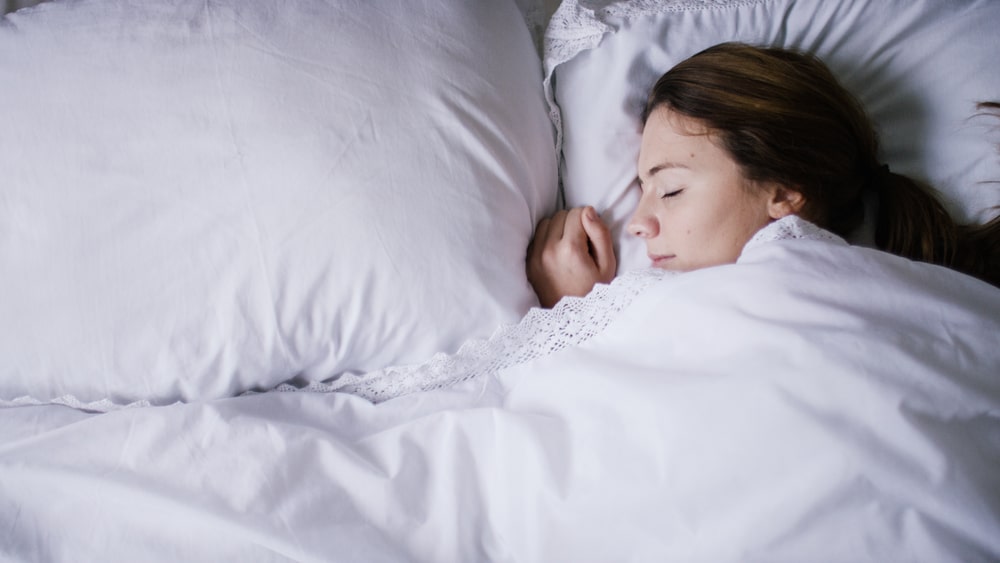
If snoring or gasping tied to sleep apnea sounds familiar, side sleeping is usually the first change a doctor raises. Side sleeping gives the tongue and soft palate somewhere to fall besides the airway, which is the mechanical reason it comes up so often in these conversations.
Research supports this with measured data. A study tracking breathing events by position found that people with obstructive sleep apnea had fewer interruptions on their side than on their back, across mild, moderate, and severe cases.
Comfort makes a difference too. A body pillow, or a regular pillow tucked between the knees, keeps the spine aligned and makes side sleeping easier to maintain through the night and reduces snoring instead of rolling onto the back within an hour of falling asleep.
Left Side or Right Side?
Both sides help more than sleeping on the back, but they are not identical. A study measuring apnea events by sleeping side found fewer interruptions when patients slept on their right side, likely tied to how blood returns to the heart in that position.
Sleeping on the left side still has a place. People with acid reflux at night often notice less overlap in symptoms on their left side, since the stomach sits lower than the esophagus in that position. Pregnant patients are also generally advised toward the left side, for circulation reasons unrelated to sleep apnea itself.
Neither side is wrong to choose. Sleeping on the right side has a slight edge in the research on breathing events, but comfort and other health factors can reasonably tip the decision toward the left.
Back Sleeping: Should You Sleep on Your Back?
Lying flat on the back is the position clinicians raise the most concern about. The airway narrows right where breathing already struggles in someone with sleep apnea, and snoring frequently gets louder in this position too, since the same soft tissue vibrates more as air squeezes through a tighter space.
A study in the European Journal of Heart Failure found that more than half of people with obstructive sleep apnea (OSA) experience worse symptoms specifically when lying on their back.
For central sleep apnea, a similar pattern appears for a different reason, tied to reduced lung volume and altered signaling between the brain and the chest muscles that control breathing.
For nights when back sleeping cannot be avoided, elevating the head of the bed by 30 to 60 degrees can reduce how much the airway narrows. A wedge pillow or an adjustable bed frame accomplishes this without asking someone to give up their preferred position entirely.
Stomach Sleeping: A Mixed Bag
Evidence on stomach sleeping is limited compared to the other two positions. Small studies have measured fewer breathing pauses in this position for some patients, since it keeps the tongue from falling straight back into the throat the way it does on the back.
The catch is comfort and spine health. Twisting the neck to breathe puts strain on it, and many people cannot maintain this position for a full night without waking up sore. It is also the least common sleeping position among adults, which makes it hard to adopt as a long-term change even when the airway benefit is present for a given person.
For someone using a CPAP machine, stomach sleeping adds a practical problem on top of the physical one. Mask seals break more easily face down, which can cause air leaks and reduce how effective the therapy is throughout the night.
Changing Sleeping Positions for Sleep Apnea Without Fighting Your Body
Years of sleeping a certain way do not change through willpower on the first night you try to reduce the effects of sleep apnea. The habit is physical too, built from years of muscle memory about how you position your body once you fall asleep.
Positional training works best in small, repeatable steps. Tucking a thicker pillow behind your back creates a barrier that makes rolling onto the back less comfortable and even more effective, without anything rigid enough to cause pain.
Some people sew a pocket into the back of a t-shirt and place a small ball inside, an old trick that predates any commercial device and still gets mentioned by sleep researchers today.
Give the change a few weeks before deciding if it helped. Sleep posture habits built over decades take longer than a handful of nights to shift, and getting frustrated after three or four attempts usually means giving up on a method that would have worked with more time.
How The Best Sleep Positions Affect Jaw Pain and TMJ Symptoms
Jaw clenching and sleep apnea positions overlap more than most people realize. Research on sleep bruxism, the medical term for clenching or grinding during sleep, links heavier clenching episodes to airway resistance while lying on the back.
The body tightens jaw and throat muscles as part of the effort to keep breathing steady, and that muscle activity can carry into the temporomandibular joint.
Patients at Ottawa TMJ & Sleep Apnea Clinic often describe a pattern where jaw pain feels worse on mornings after a night spent mostly on their back, even without remembering rolling into that position.
Dr. Dahan has found this connection common among patients managing both conditions, which is why position comes up during a TMJ evaluation as much as during a sleep apnea consultation.
Jaw soreness, morning headaches, or clicking sounds alongside sleep apnea symptoms deserve mention together at an appointment instead of being treated as separate concerns.
Our post on sleep bruxism covers how clenching develops, and Is Your Jaw Affecting Your Life? walks through how to tell if jaw symptoms have crossed into a daily problem.
Positional Therapy Devices and Sleep Apnea Positions: Do They Work?
Wearable positional trainers have grown common enough that most people researching sleep apnea positions run into them within the first few searches.
These devices strap to the chest or neck and vibrate gently when the wearer rolls onto their back, prompting a shift without a full wake-up.
Evidence on these devices is still developing. Small trials show a reduction in back-sleeping time and a corresponding drop in breathing events for people whose apnea is largely position-dependent.
Results vary more for people whose apnea has other major contributing factors, such as airway anatomy or excess tissue, where a position change will not close the gap left by an untreated diagnosis.
A simpler starting point costs far less. A body pillow, a wedge pillow, or a shirt with a pocket sewn into the back do not require an appointment or a prescription, and trying one is a reasonable first step before exploring devices that track sleep position electronically.
When Position Changes Are Not Enough
Position changes help most when someone’s sleep apnea is mild or heavily tied to back sleeping in the first place. Moderate and severe cases usually need a prescribed treatment alongside any position work, since gravity is one factor among several that narrow the airway.
An oral appliance is one option many patients move to after a diagnosis confirms sleep apnea and its severity. These devices shift the lower jaw slightly forward during sleep, which holds space open in the throat regardless of which way someone rolls overnight.
Our guide to oral appliance therapy covers how these are fitted and what the adjustment period looks like. For some patients, a breathing device such as CPAP remains part of the plan, and position work continues alongside it rather than replacing it.
Getting an accurate diagnosis matters before choosing any of these paths. Severity, airway anatomy, and the type of apnea itself all change which combination of treatments makes sense. Learn more about how Dr. Dahan evaluates sleep apnea at Ottawa TMJ & Sleep Apnea Clinic, or read about how appliances fit into a full care plan on our blog.
Questions About Sleep Apnea Sleeping Positions
Can changing my sleep position stop sleep apnea completely?
Position changes reduce symptoms for many people, particularly those with mild or position-dependent apnea. They do not replace a diagnosis or address airway anatomy that contributes to more severe cases.
What is positional sleep apnea?
It describes apnea that is significantly worse in one position, usually on the back, compared to others. A large share of people with obstructive sleep apnea show this pattern to some degree.
Does sleep position affect children with sleep apnea too?
Yes. Pediatric airways are smaller and more sensitive to position, and side sleeping is generally recommended for children with diagnosed sleep apnea as well, though a pediatric provider should guide any changes.