Most people with sleep apnea discover they have it only when someone notices it. A partner wakes up alarmed, a family member mentions the gasping sounds, or a doctor spots the pattern after asking about fatigue. By the time a diagnosis arrives, the condition has often been developing quietly for some time.
Older Canadian data found that 3% of adults reported a sleep apnea diagnosis, while more recent Canadian Health Measures Survey data suggests the diagnosed rate may be closer to 6.4%. Even so, OSA remains widely underdiagnosed.
The condition is common, underrecognized, and closely tied to factors that can be changed. This post covers what the evidence supports when it comes to reducing your risk of developing sleep apnea, and what to do if sleep apnea symptoms are already present.
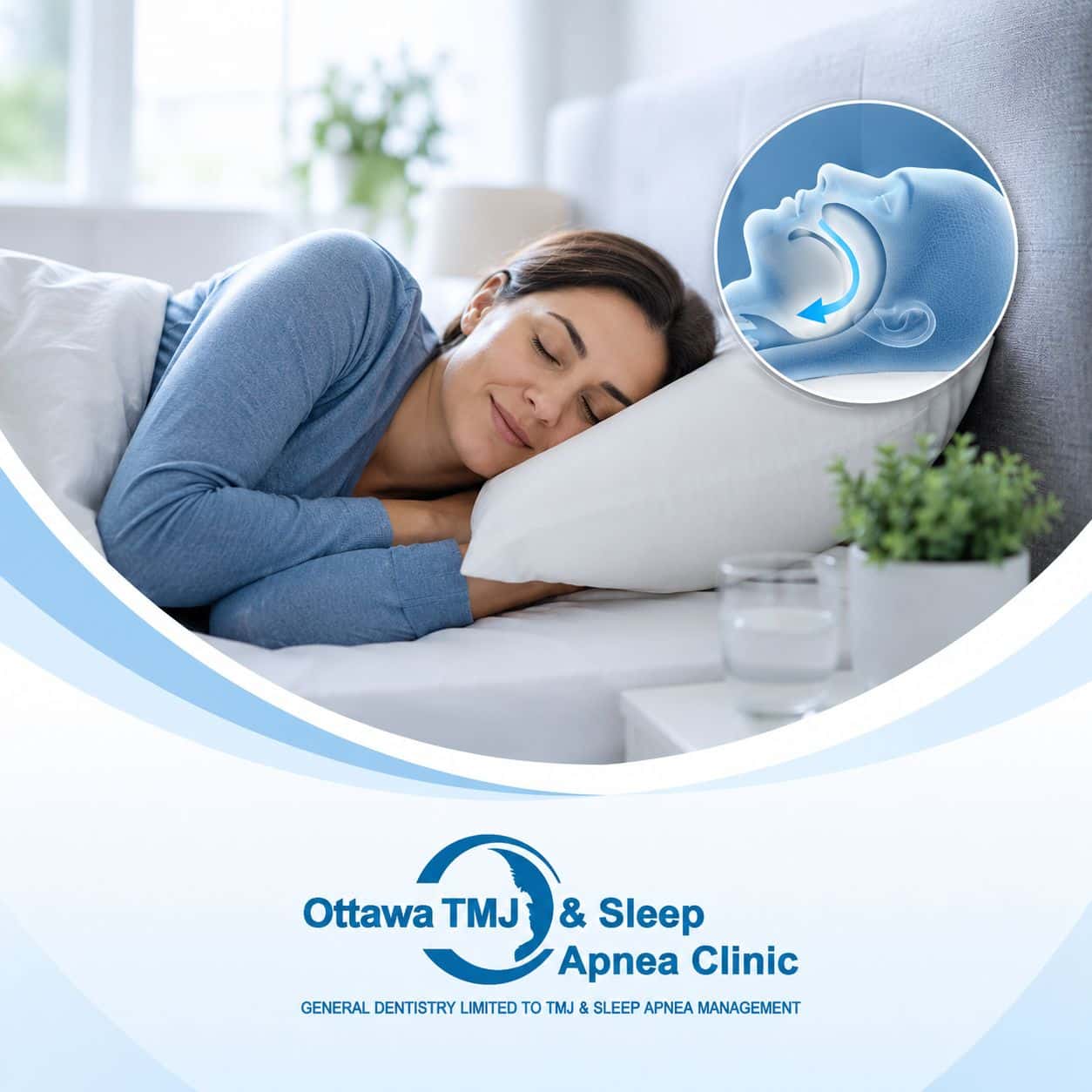
The answer depends on the type. Obstructive sleep apnea (OSA) is the most common form and it occurs when the muscles and soft tissue at the back of the throat relax too much during sleep, narrowing or blocking the upper airway.
Breathing becomes labored or stops altogether. The brain senses the drop in oxygen levels and triggers a brief awakening. The airway reopens, breathing resumes, and the cycle starts again. This can happen dozens of times an hour without the person ever fully waking up.
Because OSA is partly structural and partly driven by modifiable factors, prevention has real traction in many cases. Certain contributors, such as jaw anatomy, genetics, and neck structure, are not things you can alter. But many of the significant risk factors respond meaningfully to lifestyle and behavior.
Who is most at risk of sleep apnea?
Excess body weight, larger neck circumference, obesity, increasing age, and male sex are among the most established risk factors for obstructive sleep apnea. Smoking, chronic nasal congestion, and a family history of the condition also raise risk.
For women, hormonal shifts that occur during and after menopause can bring new vulnerability. Jaw structure and jaw positioning can also influence airway geometry, which is why TMJ-related concerns and sleep-disordered breathing sometimes overlap clinically. It’s a connection we explored in more detail in our post on who is at risk for developing OSA.
One important caveat is that sleep apnea does not follow a single profile. Thin people develop it. Women who show few obvious signs and have a healthy weight develop it. Younger adults develop it. The condition’s heterogeneity is part of why so many cases go undetected for so long.
When prevention shifts to management
For someone with no symptoms and several risk factors, preventive steps can meaningfully lower the probability of OSA developing or progressing.
For someone who already experiences fragmented sleep, morning headaches, unexplained fatigue, or audible breathing disruptions at night, the picture shifts from prevention to assessment and management. Both matter, and the steps below apply to either scenario.
How to Help Prevent Obstructive Sleep Apnea
The following recommendations for preventing sleep apnea are supported by clinical evidence and appear in guidance from bodies including the Canadian Lung Association, the Canadian Thoracic Society, and the US National Heart, Lung, and Blood Institute.
1. Manage your weight
Fatty deposits around the upper airway narrow the channel through which air must pass during sleep. Research shows that losing approximately 10% of body weight can reduce apnea severity by 26 to 30% in people with mild to moderate OSA.
If you are in higher weight ranges, even modest reductions in body weight can bring meaningful change to nighttime breathing. Weight management, physical activity, and regular exercise are among the most impactful modifiable levers available.
2. Change your sleep position
Sleeping on your back lets gravity pull soft tissue in the throat downward, which increases the likelihood of airway narrowing. Sleeping on your side may help keep the airway more open, especially for people whose breathing disruptions are worse when they sleep on their back.
For people with positional or mild obstructive sleep apnea, this single change can reduce the number of breathing interruptions per hour.
A body pillow placed behind the back can help maintain the side position through the night. The Canadian Lung Association lists side sleeping as one of the first lifestyle changes worth making.
3. Avoid alcohol, particularly in the evening
Alcohol relaxes the muscles of the upper airway. In the hours after drinking, the throat structures that help keep the airway open during sleep become less responsive to normal signaling. This amplifies the tendency toward airway collapse, even in people who would otherwise sleep without issue.
Sedative medications can carry similar effects. If you take something for sleep or anxiety before bed, reviewing that with a physician is worthwhile.
4. Quit smoking and work on lifestyle changes
Tobacco smoke irritates and inflames the lining of the nose and throat, causing swelling that further restricts an airway that may already be compromised. Chronic inflammation from smoking also increases fluid retention in soft tissue, which makes the structures more prone to collapse during sleep.
Smoking cessation reduces airway irritation and lowers the broader cardiovascular risks that frequently accompany untreated obstructive sleep apnea.
5. Address chronic nasal congestion
When nasal passages are persistently blocked from allergies, a deviated septum, or chronic sinus inflammation, the body compensates by breathing through the mouth during sleep.
Mouth breathing bypasses the nose’s natural airway resistance, increases turbulence, and can worsen or trigger snoring and obstructed breathing.
Addressing the underlying cause through allergy treatment, saline irrigation, or physician consultation can meaningfully reduce nighttime airway strain. Teeth grinding and jaw clenching are also connected to disrupted airway function. Our post on sleep bruxism goes into this relationship in more detail.
6. Strengthen airway muscles through targeted exercises
The muscles of the tongue, soft palate, and throat play an active role in keeping the airway open. Research cited by the NHLBI supports the use of orofacial exercises, sometimes called myofunctional therapy, to tone these muscles and reduce their tendency to collapse during sleep.
Studies have shown reductions in apnea-hypopnea index scores following consistent practice, with some trials showing a reduction in OSA severity of close to 40% in adults. These exercises involve tongue presses, lip seals, and soft palate drills, and are often guided by a trained therapist.
When These Steps Are Not Enough
Lifestyle changes can lower risk and reduce symptom severity, but they have a ceiling. Some cases of obstructive sleep apnea are rooted in anatomy that does not respond to behavior modification alone.
Others improve partially but persist. If symptoms are already present, the right move is to pursue a formal assessment rather than managing indefinitely without a clear picture of what is happening during sleep.
Signs that a professional assessment makes sense
- A partner or family member reports gasping, choking, or prolonged silence during sleep.
- You wake consistently unrefreshed despite spending adequate time in bed.
- Daytime fatigue affects your concentration, mood, or work performance.
- You wake with morning headaches on a regular basis.
- You have two or more of the established risk factors described above.
- Snoring has increased in frequency or volume over time.
Untreated obstructive sleep apnea carries downstream consequences. The Canadian Thoracic Society links untreated OSA to high blood pressure, higher rates of irregular heart rhythm, higher risk of stroke, and metabolic disruption. The sooner the condition is assessed and managed, the more effectively those risks can be reduced, and you can regain a healthy sleep.
Understanding more about the treatment for sleep apnea is a helpful first step. Our overview of how sleep assessments and treatment appliances work together explains what the process typically involves.
The Role of Dental Appliance Therapy
If you have been assessed and found to have mild to moderate obstructive sleep apnea, dental appliance therapy is a clinically recognized treatment option. A mandibular advancement device (oral appliance) is a custom-fitted device worn during sleep that gently repositions the lower jaw slightly forward. This tightens the soft tissue at the back of the throat and increases the space available for airflow, reducing the likelihood of the airway collapsing.
Oral appliances are quiet, portable, and worn without any machinery. They require a custom fit, as an over-the-counter device from a pharmacy does not achieve the same positioning or results. You can read more about the types of appliances available in our post on oral sleep apnea appliances, and find out more about dental appliance therapy options in our overview of treatment approaches for obstructive sleep apnea.
At Ottawa TMJ & Sleep Apnea Clinic, Dr. Dahan assesses patients for dental appliance therapy. Appliances are fabricated with CAD/CAM technology. Our technology overview explains how the process works from assessment through delivery.
Dental appliance therapy is not appropriate for all presentations of severe sleep apnea, and a thorough clinical assessment is always the starting point. It is one of several evidence-based, non-surgical approaches used at the clinic for people seeking a path to better sleep and reduced airway obstruction.
If you are unsure where you stand or want to understand whether an assessment would be worthwhile for your situation, please contact our team at Ottawa TMJ & Sleep Apnea Clinic.
Have Questions About Your Sleep?
If you have noticed symptoms of sleep apnea that concern you, or want to understand what options are available, Dr. Dahan and the team are happy to discuss your situation.
Request an Assessment